
How to Remove Hard Water Stains From Glass
Last Updated: 17 August, 2026
🤖 AI Overview Quick Summary
Hard water stains are mineral deposits left on glass after mineral-rich water evaporates. Fresh deposits may respond to a mild glass-safe cleaning solution, while older buildup can become bonded to the surface or cause glass etching. Start by identifying whether you have removable mineral buildup or surface damage, test any cleaning method on a small area, and avoid aggressive abrasives or hazardous chemicals. If normal cleaning does not restore the glass, professional hard water stain removal or glass restoration may be needed.
Introduction
If your windows look cloudy even after you clean them, the problem may not be dirt.
White spots, chalky streaks, mineral rings, and hazy patches on exterior glass are often caused by hard water stains. They form when water containing dissolved minerals dries on the glass and leaves those minerals behind.
Sprinkler overspray is a common source. Irrigation water repeatedly lands on a window, evaporates in the sun, and leaves another layer of mineral residue. Over time, the buildup can become much harder to remove.
That creates an important distinction.
A fresh mineral deposit may be removable with the right cleaning method. Older staining may bond more strongly to the glass, and prolonged exposure can contribute to etching or other surface damage.
Knowing how to remove hard water stains therefore starts with identifying the condition of the glass instead of simply using a stronger cleaner or scrubbing harder.
This guide explains what causes hard water stains, how to recognize them, which removal methods are appropriate for light and stubborn buildup, what can damage glass, and how to prevent the problem from returning.
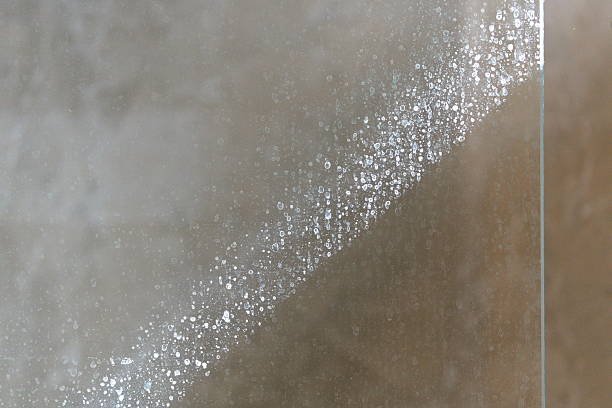
What Are Hard Water Stains?
Hard water stains are mineral deposits that remain after water evaporates from a surface.
Hard water can contain dissolved minerals such as calcium and magnesium. When the water dries, those minerals remain on the glass.
The process usually happens repeatedly:
- Mineral-rich water reaches the glass.
- Water evaporates.
- Minerals remain behind.
- More water reaches the same area.
- Additional deposits accumulate.
- The glass develops visible spots, streaks, or haze.
Unlike ordinary dust or dirt, mineral deposits may not disappear with standard glass cleaner.
That is why a window can look freshly washed and still appear cloudy.
What Causes Hard Water Stains on Glass?
Sprinkler Overspray
Irrigation overspray is one of the most common causes of exterior hard water spots.
A sprinkler does not need to soak the entire window. Repeated small amounts of water can leave mineral deposits every time the glass dries.
If the same window develops spots in a circular or repeating pattern, check nearby sprinkler heads.
Irrigation Water
Landscape irrigation can reach windows through direct spray, splashback, or runoff.
The problem becomes worse when the same glass surface is repeatedly exposed to mineral-rich water.
Rainwater and Runoff
Rain itself can leave deposits, particularly when it picks up minerals or contaminants from nearby surfaces before reaching the glass.
Roof runoff can also create mineral staining when water repeatedly flows over exterior glass or architectural surfaces.
Repeated Water Exposure
Hard water stains usually become noticeable because of repeated wetting and drying rather than a single water event.
Every cycle can add another layer of residue.
What Do Hard Water Stains Look Like?
Common signs include:
- White spots
- Chalky residue
- Circular water marks
- Mineral rings
- Cloudy glass
- Hazy patches
- Streaks that remain after normal cleaning
- Rough or textured areas on heavily affected glass
The location can also provide a clue.
For example, staining concentrated near a sprinkler zone may point toward irrigation overspray as the source.
Hard Water Spots vs. Regular Dirt
Not every cloudy window has hard water damage.
| Problem | Typical Appearance | Normal Cleaning |
|---|---|---|
| Dirt and dust | Gray film or surface grime | Usually removes it |
| Fresh water spots | Small visible marks | May remove them |
| Hard water buildup | White or chalky deposits | Often needs mineral treatment |
| Heavy mineral staining | Cloudy or persistent deposits | May require restoration |
| Glass etching | Persistent haze or altered surface | Cleaning alone may not fix it |
| Failed insulated-glass seal | Fogging between panes | Exterior cleaning will not repair it |
This distinction matters because the wrong treatment can waste time or damage the glass.
How to Remove Hard Water Stains From Glass
The best method depends on whether the deposits are fresh, established, or associated with glass damage.
Step 1: Clean the Glass First
Remove ordinary dirt, dust, and loose debris before treating mineral deposits.
This makes it easier to see the actual hard water staining.
It also reduces the chance of rubbing loose particles across the glass during the next step.
Step 2: Test a Small Area
Before treating the entire window, choose a small area and test the cleaning method.
This is especially important if the glass has:
- A protective coating
- Window film
- Tint
- Specialty treatment
- A delicate frame or seal
A small test can reveal whether the mineral deposit responds to the selected method.
Step 3: Try a Mild Method for Light Deposits
Fresh or light mineral deposits may respond to a mild acidic cleaning solution.
White vinegar diluted with water is a commonly recommended household approach for light water spots. Several consumer cleaning guides recommend vinegar-based solutions for fresh mineral deposits.
Apply the solution to the affected area, allow reasonable contact time, and gently wipe the surface.
Do not assume that longer contact time or stronger concentration is automatically better.
If the stain does not respond, stop increasing the aggressiveness of the treatment.
Step 4: Use a Purpose-Made Mineral Remover for Stubborn Deposits
Older mineral deposits may require a product specifically formulated for hard water or mineral buildup.
Always check:
- Whether the product is approved for glass
- Whether it is compatible with coatings
- Required dilution
- Contact time
- Required protective equipment
- Rinsing instructions
The product should be selected according to the surface rather than simply choosing the strongest available chemical.
Step 5: Rinse the Glass Thoroughly
After treatment, rinse according to the product instructions.
Remove remaining water rather than allowing mineral-rich water to dry naturally on the surface again.
A proper rinse is especially important when cleaning products have been used.
Step 6: Stop if the Glass Appears Etched
If the mineral residue is gone but the cloudy appearance remains, you may not be dealing with removable buildup anymore.
The glass may have been etched.
The International Window Cleaning Association’s architectural glass guide explains that chemical staining and etching can create cloudy or hazy glass that does not respond to ordinary washing.
At that point, professional glass restoration may be more appropriate than additional household cleaning.
Can Vinegar Remove Hard Water Stains?
Sometimes, but not always.
Vinegar can help with light mineral deposits because its acidity can react with certain mineral residues.
It is most appropriate as a simple option for relatively fresh and light staining.
However, vinegar may not remove:
- Heavy mineral buildup
- Long-established staining
- Deeply bonded deposits
- Glass etching
If vinegar does not work after a reasonable test, repeatedly scrubbing the glass harder is not the solution.
A professional assessment can determine whether the remaining appearance is mineral buildup or actual surface damage.
How to Remove Stubborn Hard Water Stains
Stubborn hard water stains require more care because the problem may be more than surface dirt.
A good approach is:
1. Identify the source
Determine whether the staining comes from:
- Sprinklers
- Irrigation
- Rainwater
- Roof runoff
- Repeated exterior washing
- Another water source
2. Determine the condition
Check whether the glass has removable deposits or possible etching.
3. Test a suitable treatment
Use a small test area first.
4. Avoid aggressive abrasion
Do not assume that harder scrubbing produces better results.
5. Consider professional restoration
If the deposits remain after appropriate cleaning, the glass may need specialized restoration rather than another cleaning product.
Recent professional window-restoration guidance also emphasizes assessing the glass before treatment because cloudy glass can involve mineral deposits, etching, scratches, coatings, or other surface conditions.
How to Tell if Hard Water Has Etched the Glass
This is one of the most important parts of hard water stain removal.
Surface Mineral Deposit
The mineral material remains on the glass surface.
It may respond to an appropriate mineral-removal treatment.
Glass Etching
The glass surface itself has been affected.
Signs can include:
- Persistent haze
- Cloudiness that remains after cleaning
- Visible mineral outlines
- A surface that feels different from unaffected glass
- Staining that does not respond to appropriate mineral treatment
The International Window Cleaning Association identifies hard water staining and other chemical exposure as potential causes of chemically stained glass.
If the glass is etched, ordinary cleaning may not restore it.
Professional polishing or glass restoration may be considered depending on the severity.
Why Regular Glass Cleaner Does Not Remove Hard Water Stains
Regular glass cleaners are designed primarily for everyday surface contaminants such as:
- Dust
- Fingerprints
- Light grime
- Smudges
Hard water deposits are different.
They contain mineral residue left behind when water evaporates.
That is why a window can be clean but still look cloudy.
The solution is not necessarily more glass cleaner.
The surface needs to be evaluated for mineral deposits and potential etching.
Can Pressure Washing Remove Hard Water Stains?
Pressure washing is not an appropriate solution for removing hard water stains from glass.
High-pressure water does not address the mineral chemistry responsible for the deposits, and excessive pressure can create additional risks for glass, frames, seals, and surrounding materials.
For glass surfaces, controlled cleaning and appropriate mineral-removal techniques are preferable to blasting the surface with high pressure.
This is particularly important when hard water staining is already associated with surface damage.
Common Mistakes When Removing Hard Water Stains
Scrubbing Too Hard
Aggressive scrubbing can scratch glass or damage coatings.
If gentle treatment is not working, determine why before increasing pressure.
Using Abrasive Materials
Metal scourers, unsuitable blades, rough pads, and abrasive compounds can create scratches.
Professional restoration techniques use controlled materials and procedures designed for glass surfaces.
Using Strong Chemicals Without Checking Compatibility
A chemical that removes mineral deposits from one surface may damage another.
Always verify compatibility with the glass and surrounding materials.
Mixing Cleaning Products
Never mix cleaning chemicals simply to create a stronger solution.
Some combinations can produce dangerous reactions.
Ignoring the Water Source
If a sprinkler continues spraying the window, cleaning the glass repeatedly only treats the symptom.
The source of the staining should also be corrected.
Professional Hard Water Stain Removal
When DIY cleaning does not restore the glass, professional hard water stain removal may be the better option.
A professional process should begin with inspection.
Step 1: Surface Assessment
The glass is examined for:
- Mineral deposits
- Etching
- Scratches
- Coatings
- Seal problems
- Other forms of damage
Step 2: Treatment Selection
The treatment is selected according to the condition of the glass.
Not every window requires the same chemical or restoration method.
Step 3: Controlled Mineral Removal
Professional restoration may use specialized mineral-removal products and controlled polishing techniques.
The goal is to remove the deposit without unnecessarily damaging the glass.
Step 4: Final Cleaning and Inspection
After treatment, the glass should be cleaned and inspected again to determine the remaining condition.
Step 5: Prevention
The source of the water exposure should be addressed wherever possible.
CleanMyRoofs’ hard water stain removal service is the appropriate commercial destination for homeowners who need professional treatment rather than another DIY attempt.
What Surfaces Can Develop Hard Water Stains?
Hard water mineral deposits can affect many glass and exterior surfaces.
Windows
Exterior windows are especially vulnerable when irrigation water repeatedly reaches the glass.
Glass Doors
Sliding glass doors and exterior entry glass can develop mineral spotting from irrigation and repeated water exposure.
Skylights
Skylights can accumulate mineral residue from rain, runoff, and cleaning water.
Shower Glass
Interior shower glass can develop limescale and mineral deposits when hard water repeatedly dries on the surface.
Architectural Glass
Large glass surfaces can develop visible mineral buildup when exposed to irrigation, runoff, or repeated washing.
The removal method should always match the actual surface and its condition.
How to Prevent Hard Water Stains
Prevention starts with controlling the water source.
Redirect Sprinklers
Check sprinkler heads around the property.
Make sure they are not repeatedly spraying:
- Windows
- Glass doors
- Skylights
- Exterior glass
Adjust Irrigation
If a sprinkler is creating repeated overspray, adjusting its direction or coverage can reduce future staining.
Address Problems Early
Fresh mineral deposits are generally easier to address than long-established buildup.
Regular inspections can help identify the problem before it becomes severe.
Maintain Exterior Glass
Routine exterior window cleaning can remove ordinary dirt and help identify mineral deposits before they become a major restoration issue.
Consider Protective Treatments
Depending on the glass and its condition, a suitable protective treatment may help make future maintenance easier.
The product should be compatible with the specific glass surface.
How Often Should Hard Water Stains Be Removed?
There is no universal schedule because the rate of mineral buildup depends on:
- Water mineral content
- Sprinkler exposure
- Irrigation frequency
- Weather
- Window orientation
- Local environmental conditions
- Existing glass condition
Instead of waiting for heavy buildup, inspect exterior glass regularly.
If you notice new white spots or mineral rings, address the source of the water and treat the deposits before they become more established.
How to Prevent Hard Water Spots After Window Cleaning
A clean window can develop spots again if mineral-rich water continues to dry on it.
Prevention should therefore address both cleaning and water quality/exposure.
For professional exterior window cleaning, purified-water cleaning systems can reduce mineral residue during the final rinse because fewer dissolved minerals are left behind on the glass.
The bigger issue, however, is repeated exposure.
If irrigation water continues hitting the same window, even professionally cleaned glass can develop new spots.
Fixing the sprinkler problem is therefore an important part of long-term prevention.
Hard Water Stains: Cleaning vs. Restoration
Understanding the difference helps you choose the right solution.
| Condition | Best Approach |
| Light mineral spots | Mild, glass-safe cleaning |
| Moderate mineral buildup | Purpose-made mineral remover |
| Heavy mineral deposits | Professional assessment/treatment |
| Persistent cloudy glass | Check for etching |
| Etched glass | Professional restoration may be required |
| Repeated sprinkler spotting | Correct irrigation source |
| Damaged or specialty glass | Professional assessment |
The goal should always be to use the least aggressive method that can safely solve the actual problem.
The International Window Cleaning Association provides guidance on identifying and restoring architectural glass affected by hard water stains and other surface deposits.
Frequently Asked Questions
Can hard water stains be completely removed from glass?
Many surface mineral deposits can be removed, especially when they are treated before they become severe. However, long-term staining can contribute to glass etching, and etched glass may require professional restoration rather than ordinary cleaning.
What is the best way to remove hard water stains from windows?
Start by cleaning the glass and testing a suitable glass-safe mineral-removal method on a small area. Light deposits may respond to mild acidic solutions, while heavy buildup may require specialized treatment or professional restoration.
Does vinegar remove hard water stains?
Vinegar can help with some light mineral deposits, but it may not remove heavy buildup or etched glass. If the stain remains after a reasonable test, avoid aggressive scrubbing and consider professional assessment.
Why do my windows keep getting hard water spots?
Repeated exposure to mineral-rich water is usually the reason. Sprinkler overspray is a common source because water repeatedly reaches the glass, evaporates, and leaves mineral deposits behind.
Can hard water stains permanently damage glass?
Long-term mineral deposits can contribute to glass etching. Once the glass surface has been affected, normal window cleaning may not restore its original appearance.
Can pressure washing remove hard water stains?
No. Pressure washing is not an appropriate solution for mineral deposits on glass and can increase the risk of damage to glass, frames, seals, or surrounding materials.
What removes stubborn hard water stains?
Stubborn stains may require a glass-safe mineral-removal product or professional restoration. The correct method depends on whether the material is removable buildup or actual glass etching.
How do I remove hard water stains from exterior windows?
First remove normal dirt, identify the mineral buildup, test an appropriate glass-safe treatment on a small area, rinse thoroughly, and stop if the glass appears etched or the treatment is not working. Professional restoration may be appropriate for severe staining.
How can I prevent hard water stains from coming back?
Redirect sprinklers away from windows, reduce irrigation overspray, address new mineral spots early, maintain exterior glass regularly, and consider an appropriate protective treatment when suitable for the glass.
When should I hire a professional for hard water stain removal?
Professional service is appropriate when normal cleaning does not remove the staining, the glass appears etched, the affected area is extensive, the windows are difficult to reach, or you are unsure which treatment is safe for the glass.
Final CTA
Hard water stains are not always a sign that your windows need replacement.
The first step is determining whether you are dealing with removable mineral deposits or glass that has already been affected by long-term staining.
If normal window cleaning is no longer removing white spots, cloudy patches, or mineral buildup, professional assessment can help determine the safest restoration approach.
For stubborn mineral deposits and professional glass restoration, visit the hard water stain removal service or contact CleanMyRoofs at 877-565-4094 to request an assessment.