
Professional Roof Moss Removal: Safe Treatment, Prevention & Roof Care
Last Updated: August 17, 2026
🤖 AI Overview Quick Summary
Roof moss removal is the process of safely treating and removing moss growth from roofing surfaces before it interferes with shingle performance or water drainage. The safest approach depends on the roofing material, manufacturer guidance, roof condition, and amount of growth. For asphalt shingles, industry guidance recommends avoiding aggressive scrubbing and power washing because these methods can loosen protective granules. Instead, appropriate cleaning solutions and controlled low-pressure rinsing can help manage moss while reducing unnecessary surface damage.
Best for: Homeowners, property managers, and anyone dealing with visible moss or recurring organic growth on a roof
Common problems: Moss growth, trapped moisture, blocked water shedding, shaded roof areas, recurring organic buildup
Main decision: Whether to handle minor roof moss yourself or use a professional roof-cleaning service
Key consideration: Choose a cleaning method that matches the roofing material and manufacturer recommendations
Introduction
Professional roof moss removal starts with identifying where moss is growing, checking the condition of the roofing material, and choosing a cleaning method that removes organic buildup without unnecessary pressure. Moss commonly develops in shaded or damp areas where moisture remains on the roof surface for longer periods.
Roof moss removal should start with identifying why moss is growing and how much of the roof is affected. Moss commonly develops where moisture remains available for long periods, particularly on shaded roof sections and areas where leaves, needles, or other debris accumulate.
The visible green growth is not the only concern. According to the Asphalt Roofing Manufacturers Association, moss can interfere with the intended water-shedding function of asphalt shingles and hold debris against the roof. ARMA also advises against power washing, brushing, or brooming asphalt shingles because these actions can loosen roofing granules.
Therefore, the goal is not simply to make the roof look clean. The goal is to remove or control organic growth while protecting the roofing material.
Our Roof Moss Removal Inspection Experience
During a typical roof moss removal inspection, we first look at where moss is concentrated, how firmly it has attached to the roofing surface, and whether moisture is collecting around affected areas. We also check nearby roof edges, shaded sections, and areas where organic debris tends to accumulate.
One common pattern we see is heavier moss growth on roof sections that receive less direct sunlight. In these areas, moisture can remain on the surface longer, allowing organic growth to return more easily.
Instead of treating every roof with the same pressure or cleaning method, we adjust the approach according to the roofing material, moss coverage, and surface condition. This inspection-first process helps us avoid unnecessary pressure and focus treatment where it is actually needed.
Example: What We Check During Roof Moss Removal
For example, a roof may have heavy moss growth on one shaded section while the rest of the roof has only light organic buildup. In that situation, the entire roof does not necessarily require the same level of treatment.
We can identify the heavily affected area, examine the surrounding shingles, determine the appropriate cleaning method, and then focus treatment where the moss and organic buildup are actually present.
A roof inspection may also reveal loose shingles, accumulated debris, blocked drainage areas, or moss developing around roof edges. Identifying these conditions before cleaning gives the homeowner a clearer picture of the roof’s current condition.
Roof Moss Inspection Checklist
- Moss location and coverage
- Shingle condition
- Shaded areas
- Organic debris
- Roof edges
- Drainage areas
- Moisture-prone sections
- Areas requiring additional treatment
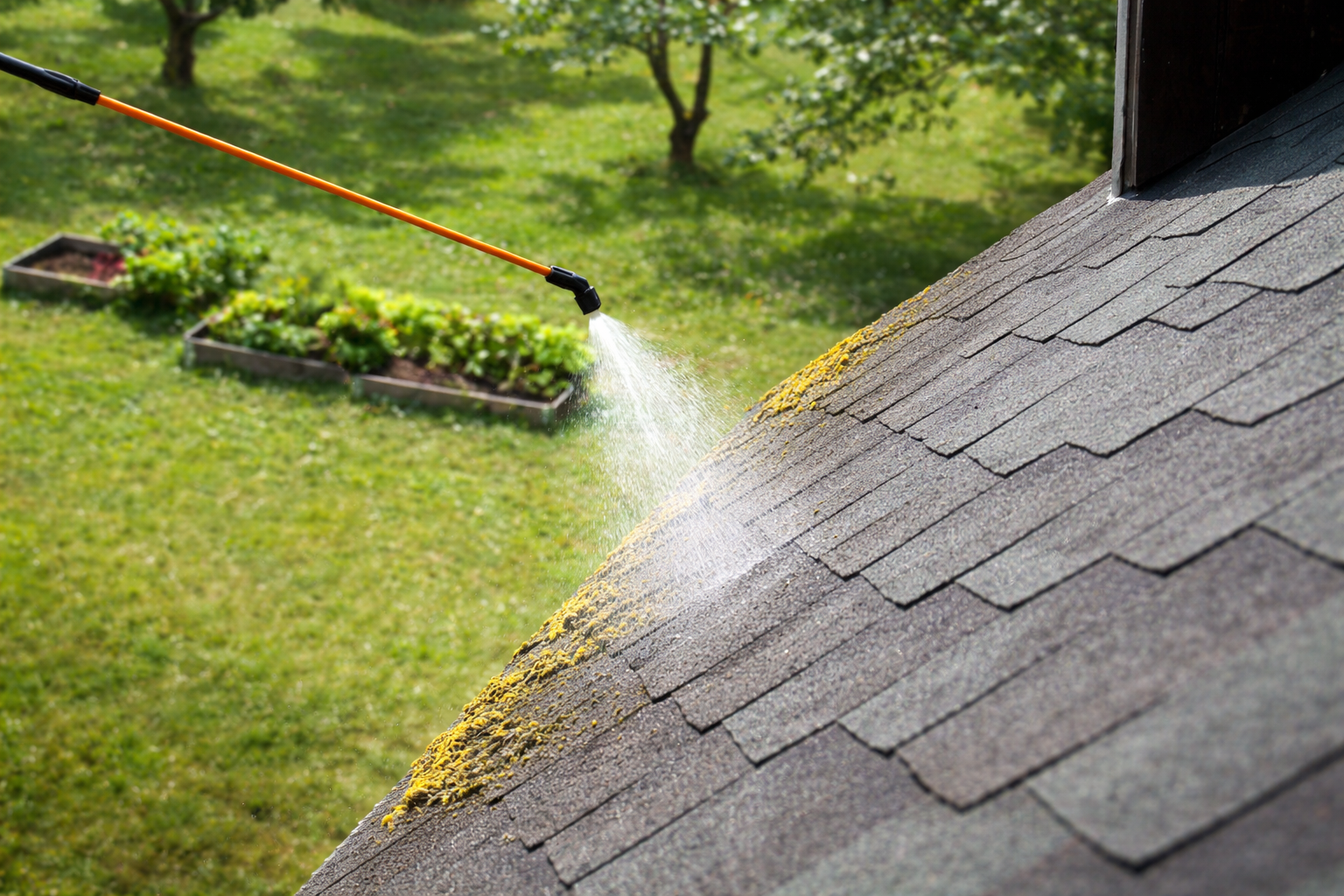
Why Does Moss Grow on Roofs?
Moss needs moisture to establish itself. A roof that dries quickly after rain is generally less favorable to moss than one that remains damp for extended periods.
Several conditions can contribute to moss growth:
- Heavy tree coverage
- Persistent shade
- Accumulated leaves and pine needles
- Poor airflow around the roof
- Moisture retention
- Nearby vegetation
- Blocked or poorly maintained drainage
- Repeated wet weather
In addition, debris can create small areas where moisture remains trapped against shingles.
Shade and Moisture Create a Favorable Environment
North-facing or heavily shaded roof sections may receive less direct sunlight. Consequently, these areas can remain damp longer after rain or snow.
Over time, repeated moisture exposure can create conditions where moss and other organic growth become easier to establish.
What Problems Can Roof Moss Cause?
A small amount of moss does not automatically mean that a roof needs replacement. However, established moss should not simply be ignored.
Moss can:
- Hold moisture against roofing materials
- Interfere with normal water shedding
- Hold leaves and other debris against shingles
- Make roof surfaces slippery
- Contribute to deterioration when growth becomes established
- Make existing roof problems harder to identify
ARMA specifically notes that moss growth can damage asphalt shingles and interfere with their intended water-shedding function.
Moss Is Different From Algae
Homeowners sometimes use the terms moss and algae interchangeably, but they are not the same problem.
Algae can create dark streaks or discoloration across asphalt shingles. Moss, on the other hand, produces visible green growth and can physically occupy the surface.
The Asphalt Roofing Manufacturers Association recommends consulting the shingle manufacturer for information about moss and appropriate removal methods.
This distinction matters because the treatment should address the actual problem rather than applying the same cleaning method to every roof.
Roof Moss Removal vs. Roof Cleaning
These services can overlap, but they are not necessarily identical.
| Cleaning Need | Primary Problem | Main Objective | Important Consideration |
|---|---|---|---|
| Roof moss removal | Visible moss growth | Treat and remove moss | Avoid damaging shingles |
| Roof cleaning | Dirt and organic buildup | Improve roof cleanliness | Match method to material |
| Algae treatment | Dark algae staining | Control discoloration | Follow manufacturer guidance |
| Debris removal | Leaves and needles | Improve drainage and airflow | Use non-abrasive methods |
| Roof inspection | Possible damage | Identify maintenance concerns | Roof condition should be assessed |
As a result, a roof with heavy moss may require more than simply rinsing the surface.
Why High-Pressure Washing Is a Poor Choice for Asphalt Shingles
A pressure washer can make a dirty surface appear clean very quickly. However, speed does not make it the appropriate method for asphalt shingles.
ARMA’s residential roofing guidance specifically says not to use a power washer or brush/broom to clean algae from roof surfaces. It recommends appropriate cleaning solutions followed by low-pressure rinsing.
High pressure can create several problems:
- Loosen protective granules
- Damage the shingle surface
- Force water into vulnerable areas
- Create uneven cleaning
- Increase safety risks on a wet roof
Furthermore, walking on a treated or wet roof can become hazardous. ARMA recommends appropriate fall protection and advises relying on professionals for shingle cleaning.
How Professional Roof Moss Removal Works
A professional service should begin with assessment rather than immediately applying chemicals or water.
1. Roof Condition Assessment
The first step is identifying:
- Roofing material
- Roof pitch
- Moss coverage
- Algae or staining
- Existing shingle deterioration
- Debris accumulation
- Areas that remain shaded
- Potential drainage problems
This information helps determine whether cleaning is appropriate and what method should be used.
2. Protecting the Surrounding Property
Roof cleaning can affect areas below the roofline.
Therefore, surrounding landscaping, exterior walls, windows, outdoor furniture, and other vulnerable areas should be considered before treatment begins.
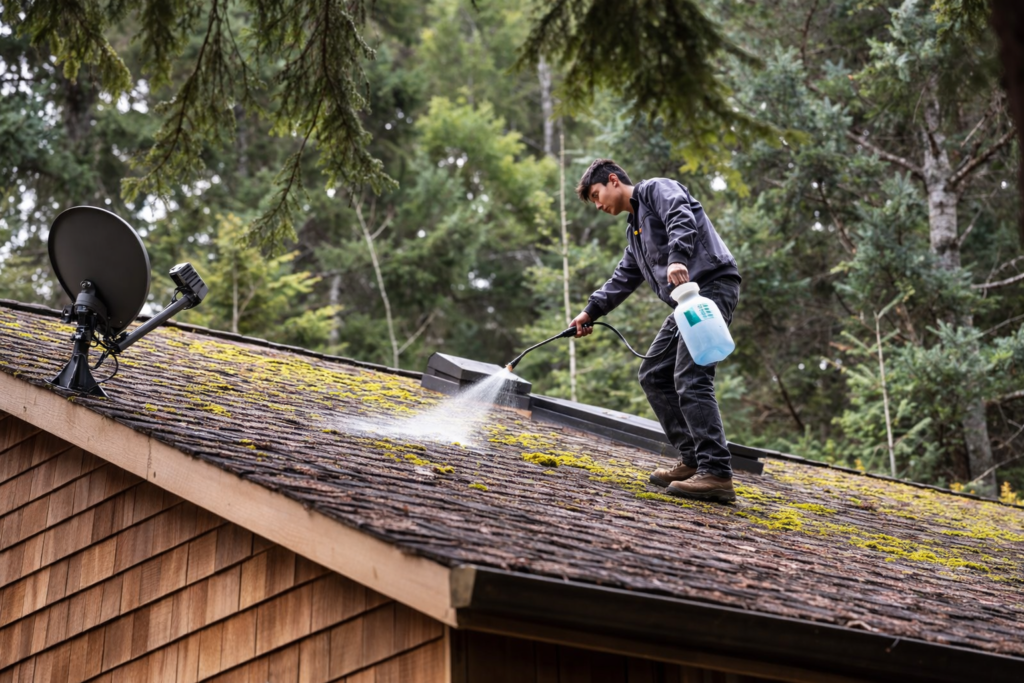
3. Applying an Appropriate Cleaning Solution
ARMA’s guidance states that algae, moss, and lichen can be difficult to remove and generally recommends a diluted cleaning solution selected with consideration for the roofing manufacturer’s instructions.
The treatment should be appropriate for the roofing material and applied carefully.
4. Allowing the Treatment to Work
A cleaning solution may need time to work on organic growth.
Instead of relying on aggressive physical force, the treatment process allows the solution to address the buildup before controlled rinsing.
5. Low-Pressure Rinsing
After treatment, the roof can be rinsed with low-pressure water.
Owens Corning also identifies low-pressure soft washing as a commonly recommended approach for cleaning asphalt shingles and emphasizes following manufacturer recommendations.
6. Final Inspection
Finally, the roof should be inspected again.
The goal is to identify remaining growth, damaged shingles, drainage concerns, or other issues that may require additional attention.
Can You Remove Roof Moss Yourself?
Minor maintenance tasks such as keeping gutters clear and removing loose roof debris from a safe position can help reduce conditions that encourage moss.
However, climbing onto a roof to remove established moss introduces safety and material risks.
ARMA advises against walking directly on algae-affected roof surfaces because they can become extremely slippery, particularly when wet.
For that reason, professional roof moss removal can make more sense when:
- Moss covers a large area
- The roof is steep
- The surface is slippery
- Shingles are aging
- You cannot safely access the roof
- You are unsure which treatment is appropriate
- Moss keeps returning
How to Prevent Moss From Returning
Removing existing moss is only part of the solution.
Prevention starts with reducing the conditions that allow moss to thrive.
Keep the Roof Free From Debris
Leaves and pine needles can hold moisture against the roof.
ARMA recommends removing accumulated roof debris using a safe, non-abrasive method and directing airflow down the roof slope so debris is not pushed underneath shingle edges.
Maintain Gutters and Drainage
Clear gutters help water move away from the roof and property.
Regular gutter maintenance is especially useful when trees around the property produce significant amounts of leaves or needles.
Reduce Excessive Shade
Tree branches that heavily shade the roof can reduce drying.
Keeping vegetation appropriately trimmed can improve airflow and reduce the amount of debris reaching the roof.
Inspect the Roof Regularly
A seasonal roof inspection can help you identify:
- New moss growth
- Missing shingles
- Damaged flashing
- Debris accumulation
- Blocked drainage
- Areas that remain unusually damp
Early attention is usually easier than dealing with an advanced maintenance problem.
How Often Should You Schedule Roof Moss Removal?
There is no universal schedule for every roof.
Instead, the appropriate frequency depends on the environment and condition of the roof.
Consider more frequent inspections if your property has:
- Dense tree coverage
- Heavy shade
- Frequent debris accumulation
- Recurring moss
- Poor roof ventilation
- Persistent moisture
Rather than automatically scheduling cleaning every year, inspect the roof and respond to actual conditions.
This approach avoids unnecessary cleaning while still addressing moss before it becomes a larger maintenance concern.
What About Roof Moss Removal Cost?
The cost of roof moss removal depends on the property and the amount of work involved.
Important factors include:
- Roof size
- Roof pitch
- Roofing material
- Amount of moss
- Accessibility
- Existing staining
- Debris accumulation
- Required property protection
- Additional roof maintenance needs
Therefore, a professional inspection is more useful than relying on a generic price range.
A contractor should explain what the quoted service includes and whether additional treatment or maintenance is recommended.
Choosing a Professional Roof Moss Removal Company
Before hiring a contractor, ask specific questions about the cleaning method.
Questions to Ask
- What roofing material do you see on my home?
- What cleaning method will you use?
- Will you use high pressure on my shingles?
- How will you protect my landscaping?
- Do you follow the roofing manufacturer’s cleaning recommendations?
- How will you handle runoff?
- Will you inspect the roof before cleaning?
- Will you identify damaged shingles separately from moss growth?
- What areas are included in the quoted service?
- What maintenance can reduce future moss growth?
A good contractor should be able to explain the process clearly rather than simply promising that the roof will look new.
Professional Roof Moss Removal for Long-Term Roof Care
Roof moss removal should be viewed as part of roof maintenance rather than a simple cosmetic service.
When moss is allowed to establish itself, it can retain moisture, hold debris, and interfere with the normal performance of asphalt shingles. At the same time, aggressive cleaning can create its own problems.
The better approach is to identify the roofing material, assess the condition, choose an appropriate treatment, protect the surrounding property, and use controlled cleaning methods.
For asphalt shingles, both ARMA and Owens Corning emphasize caution with aggressive cleaning and support low-pressure approaches when roof cleaning is appropriate.
Frequently Asked Questions About Roof Moss Removal
What is the safest way to remove moss from an asphalt shingle roof?
The appropriate method depends on the roof and manufacturer’s recommendations. ARMA advises using suitable cleaning solutions rather than scrubbing, brushing, or power washing asphalt shingles, followed by low-pressure rinsing.
Can I use a pressure washer to remove roof moss?
High-pressure washing is not recommended for asphalt shingles. It can loosen protective granules and damage the roofing surface. ARMA specifically advises against using power washers on roof surfaces.
Does roof moss damage shingles?
Established moss can damage asphalt shingles and interfere with their intended water-shedding function. It can also hold moisture and debris against the roof.
How do I know if my roof has moss or algae?
Moss typically appears as visible green growth or tufts on the roof surface. Algae more commonly creates dark streaks or discoloration. Because the two conditions are different, identifying the growth correctly helps determine the appropriate treatment.
Can roof moss come back after cleaning?
Yes. Cleaning removes existing growth, but it does not eliminate the environmental conditions that allow moss to return. Shade, moisture, debris, and nearby vegetation can continue to encourage new growth.
Should I clean my roof if the shingles are already old?
An older roof should be assessed before cleaning. If shingles are brittle, damaged, or losing granules, aggressive cleaning can make the situation worse. A professional inspection can help determine whether cleaning or another maintenance option makes sense.
Does roof moss removal require walking on the roof?
Not necessarily. Professional cleaning methods can often be performed using appropriate equipment and access techniques. Avoid walking on slippery or moss-covered shingles unless proper safety procedures and equipment are in place.
Final Thoughts
Roof moss removal is most effective when it combines proper identification, appropriate treatment, safe access, and preventive maintenance.
The objective should never be to remove moss as quickly as possible at any cost. Instead, the priority should be protecting the roofing material while addressing the conditions that allow organic growth to develop.
If your roof has visible moss, recurring organic buildup, or areas that remain damp and shaded, a professional assessment can help you determine the right next step.
Ready to address roof moss before it becomes a larger maintenance problem? Contact CleanMyRoofs at 877-565-4094 to request a roof cleaning assessment.
Related Roof Care
You can also explore our roof cleaning service for broader roof maintenance and cleaning needs. Roof Cleaning Services
For another related maintenance option, see our soft washing services and learn how low-pressure exterior cleaning works. Soft Wash Services