Commercial Pressure Washing: Professional Cleaning for Business Properties
Last Updated: August 17, 2026
🤖 AI Overview Quick Summary
Commercial pressure washing is a professional exterior cleaning service used to remove dirt, grease, oil, algae, stains, gum, and other buildup from business properties. The right cleaning method depends on the surface, contamination, and condition of the property. Professional crews may use pressure washing, hot-water cleaning, soft washing, detergents, and controlled rinsing to clean commercial buildings, sidewalks, concrete, parking areas, storefronts, and other exterior surfaces without unnecessarily damaging the material.
Introduction
A commercial property can collect dirt, grease, oil, algae, gum, tire marks, and environmental buildup faster than most homeowners realize. High-traffic walkways, storefront entrances, parking areas, loading zones, and exterior walls are exposed to constant use and weather.
That is where commercial pressure washing becomes an important part of exterior property maintenance.
Unlike occasional residential cleaning, commercial properties often require a more organized approach. The cleaning method needs to match the surface, the type of buildup, and the operating conditions of the business.
For example, concrete may require a different cleaning approach than painted siding, brick, storefront materials, or other exterior surfaces. Using excessive pressure simply because a surface looks heavily contaminated can create unnecessary damage.
A professional cleaning assessment helps determine whether pressure washing, soft washing, hot-water cleaning, or a combination of methods is appropriate.
The goal is not simply to make a building look cleaner. Proper commercial exterior cleaning can help maintain the appearance, usability, and condition of surfaces that customers, employees, tenants, and visitors interact with every day.
What Is Commercial Pressure Washing?
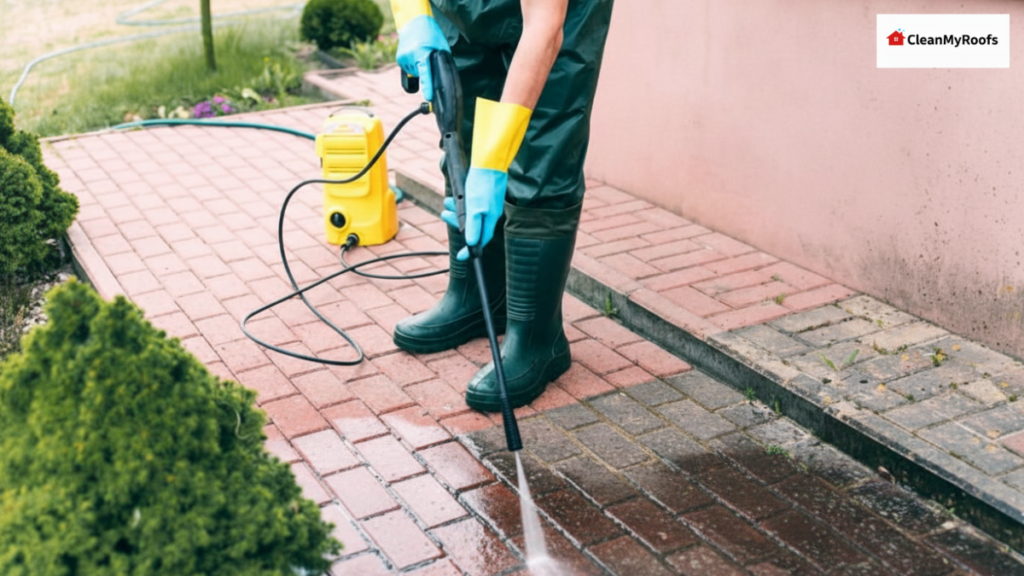
Commercial pressure washing uses specialized equipment, controlled water pressure, cleaning solutions, and surface-specific techniques to remove accumulated contaminants from commercial properties.
The process can be used for many exterior cleaning applications, including:
- Commercial building exteriors
- Concrete walkways
- Sidewalks
- Storefront entrances
- Parking areas
- Loading zones
- Dumpster areas
- Exterior walls
- Drive-through areas
- Hardscape surfaces
- Service areas
- Signs and surrounding surfaces
The important part is not simply how much pressure the equipment can produce.
Instead, professional cleaning depends on selecting the appropriate combination of pressure, water temperature, cleaning solution, distance, nozzle, and technique for the material being cleaned.
This surface-specific approach is especially important for commercial properties where one site may contain several different materials.
Why Do Commercial Properties Need Professional Pressure Washing?
Businesses deal with exterior contamination that ordinary routine cleaning cannot always remove effectively.
Foot traffic can leave dirt and gum around entrances. Vehicles can introduce oil, grease, and tire marks into parking areas. Food-service properties may experience heavier grease accumulation around service areas and dumpster pads.
Meanwhile, shaded exterior surfaces may develop algae, mildew, or other organic buildup.
Regular cleaning can therefore address several practical problems at the same time.
1. Maintain a Professional Appearance
Customers form impressions before they enter a business.
A clean entrance, walkway, storefront, and exterior can create a more maintained appearance than surfaces covered with stains and accumulated grime.
2. Reduce Surface Buildup
Dirt and contaminants can become increasingly difficult to remove when they are allowed to accumulate for long periods.
Scheduled cleaning helps prevent heavy buildup from becoming a larger maintenance problem.
3. Improve High-Traffic Areas
Walkways and entrances receive constant foot traffic. Removing accumulated grime, algae, grease, and other contaminants can help keep these areas cleaner and easier to maintain.
4. Protect Exterior Surfaces
Different materials respond differently to cleaning pressure and chemicals.
Professional assessment helps reduce the risk of using an unnecessarily aggressive cleaning method.
What Can Commercial Pressure Washing Remove?
Commercial pressure washing can address many types of exterior contamination.
Common examples include:
- Dirt and mud
- Dust and environmental grime
- Oil stains
- Grease
- Tire marks
- Organic buildup
- Algae
- Mildew
- Moss
- Chewing gum
- Surface staining
- Debris
- Accumulated residue
The appropriate cleaning method depends on the contaminant and the material underneath it.
For example, stubborn grease may respond better to heated water and an appropriate cleaning solution, while a delicate exterior may require lower pressure and chemical treatment.
Commercial Pressure Washing for Buildings and Storefronts
Commercial buildings can have large exterior surfaces that are difficult to maintain with basic cleaning equipment.
Pressure washing for commercial buildings may include exterior walls, entry areas, sidewalks, concrete surfaces, and other accessible portions of the property.
Storefronts deserve particular attention because entrances are among the first areas customers see.
A professional cleaning plan can address:
- Entrance areas
- Exterior walls
- Concrete approaches
- Sidewalks
- Awnings and surrounding surfaces
- Service areas
- High-traffic exterior zones
The cleaning method should always be adjusted to the material. Brick, concrete, painted surfaces, metal, and other materials can require different levels of pressure and different cleaning solutions.
Commercial Concrete and Sidewalk Pressure Washing
Concrete is one of the most common surfaces around commercial properties.
It can collect:
- Oil
- Grease
- Tire marks
- Dirt
- Gum
- Algae
- Mud
- General atmospheric buildup
Because concrete is porous, contaminants can become embedded in the surface rather than remaining only on top.
Professional commercial pressure washing can help remove surface buildup and restore a cleaner appearance.
Sidewalks and entryways deserve particular attention because they are among the most frequently used areas of a commercial property.
Removing Oil, Grease, and Heavy Commercial Buildup
Oil and grease can be more difficult to remove than ordinary dirt.
Cold water pressure alone may not always provide the desired result when oily contamination has been present for an extended period.
Depending on the surface and condition, professional cleaning may combine:
- Heated water
- Appropriate detergents
- Controlled pressure
- Surface agitation
- Targeted treatment
- Thorough rinsing
Commercial cleaning providers commonly use hot or ambient water options depending on the type of contamination and surface being cleaned.
The objective is to break down the contaminant without unnecessarily damaging the underlying surface.
Hot Water vs. Cold Water Commercial Pressure Washing
The choice between hot and cold water depends largely on what needs to be removed.
Cold Water
Cold-water pressure washing can be effective for:
- Dirt
- Mud
- Dust
- Loose debris
- General surface buildup
Hot Water
Hot-water cleaning can be particularly useful when dealing with:
- Grease
- Oil
- Heavy organic residue
- Certain stubborn contaminants
Commercial cleaning companies commonly use heated systems for demanding grease and oil cleaning applications.
However, hot water is not automatically the best choice for every surface.
A professional should evaluate the material before selecting the cleaning temperature and pressure.
Pressure Washing vs. Soft Washing for Commercial Properties
Not every commercial exterior should receive aggressive pressure.
Pressure washing is generally useful for durable hard surfaces such as appropriate concrete and other materials that can tolerate controlled mechanical cleaning.
Soft washing relies more heavily on cleaning solutions and lower-pressure application and can be more appropriate for surfaces that could be damaged by excessive mechanical force.
The correct approach is therefore based on the material and contamination rather than simply choosing the highest available pressure.
A professional commercial pressure washing company should be able to determine when pressure washing is appropriate and when a softer cleaning method is more suitable.
Why Pressure Control Matters
More pressure does not automatically mean better cleaning.
Excessive pressure can potentially damage:
- Painted surfaces
- Older masonry
- Mortar joints
- Certain siding materials
- Delicate exterior finishes
- Worn or deteriorated surfaces
Professional cleaning focuses on matching the method to the surface.
This may involve changing the pressure, nozzle, distance, temperature, cleaning solution, or application technique.
That approach is especially important when cleaning a property with several different exterior materials.
How Professional Commercial Pressure Washing Works
A professional commercial cleaning process normally begins with an assessment rather than immediately turning on the pressure washer.
Step 1: Inspect the Property
The surface material, contamination, access points, drainage, and surrounding areas are evaluated.
Step 2: Identify the Cleaning Method
The technician determines whether pressure washing, soft washing, hot-water cleaning, detergent treatment, or another approach is appropriate.
Step 3: Protect Sensitive Areas
Windows, doors, landscaping, signage, electrical components, and other sensitive areas should be considered before cleaning begins.
Step 4: Apply the Appropriate Treatment
Depending on the surface, a cleaning solution may be used to loosen organic material, grease, dirt, or other contaminants.
Step 5: Controlled Cleaning
The surface is cleaned using pressure and water flow appropriate for its material and condition.
Step 6: Final Rinse and Inspection
The area is rinsed and inspected to identify remaining buildup or areas that require additional treatment.
This assessment-based process is consistent with the broader commercial cleaning principle of matching the method to the surface rather than treating every material the same way.
Commercial Pressure Washing for Parking Areas and High-Traffic Surfaces
Parking areas experience constant exposure to vehicles, weather, dirt, oil, and tire marks.
High-traffic concrete can also develop darkened areas that make the property appear older or poorly maintained.
Routine cleaning can target:
- Oil stains
- Tire marks
- Dirt
- Mud
- Gum
- Organic buildup
- General surface discoloration
For businesses with large parking areas or loading zones, a planned maintenance schedule can be more practical than waiting until the entire surface becomes heavily contaminated.
Commercial Pressure Washing for Different Types of Businesses
Commercial pressure washing can be useful for many types of properties.
Examples include:
Retail Properties
Storefronts, entrances, sidewalks, and surrounding concrete can accumulate dirt and gum quickly.
Restaurants
Food-service properties may experience grease, oil, food residue, and heavy buildup around exterior service areas.
Office Buildings
Building entrances, sidewalks, exterior walls, and parking areas contribute to the overall appearance of an office property.
Warehouses
Loading areas, concrete surfaces, entrances, and service zones may require periodic deep cleaning.
Property Management Sites
Multi-tenant properties can benefit from scheduled exterior maintenance covering common areas, walkways, parking surfaces, and building exteriors.
How Often Should a Commercial Property Be Pressure Washed?
There is no universal schedule that works for every commercial property.
The appropriate frequency depends on:
- Property type
- Foot traffic
- Vehicle traffic
- Weather exposure
- Surface material
- Nearby trees
- Grease or oil exposure
- Organic growth
- Existing staining
- Property appearance requirements
A busy restaurant may need more frequent cleaning around service and dumpster areas than a low-traffic office building.
Likewise, a property surrounded by trees may develop organic buildup faster than an exposed site.
Instead of choosing a schedule based only on the calendar, property managers should consider how quickly contamination returns.
What Should You Look for in a Commercial Pressure Washing Company?
Choosing a commercial pressure washing company should involve more than comparing the lowest quote.
Consider whether the provider:
- Understands different exterior materials
- Uses appropriate pressure levels
- Can handle commercial-scale work
- Offers surface-specific cleaning
- Understands hot-water cleaning
- Uses appropriate cleaning solutions
- Protects sensitive areas
- Communicates scheduling clearly
- Provides a detailed scope of work
- Can accommodate recurring maintenance
For larger commercial properties, scheduling can also matter as much as the cleaning itself. Professional providers may coordinate work around business operating hours to reduce disruption.
A Practical Commercial Cleaning Assessment
Before scheduling commercial pressure washing services, a property manager can quickly review the property using this checklist:
- Are sidewalks visibly dark or stained?
- Are there oil or grease marks around parking areas?
- Is gum accumulating near entrances?
- Is algae or organic growth visible?
- Are loading areas heavily soiled?
- Does the storefront look noticeably darker than surrounding surfaces?
- Are there areas where dirt returns quickly after rain?
- Are there surfaces that have not been professionally cleaned for an extended period?
If several answers are yes, a professional site assessment can help determine which areas need immediate attention and which can be included in routine maintenance.
Commercial Pressure Washing and Water Management
Commercial exterior cleaning should also consider where water and removed contaminants will travel.
This is particularly important when cleaning areas with significant grease, debris, or other contaminants.
The EPA notes that pressure-washing work subject to applicable containment requirements must prevent dust and debris, including wastewater, from leaving the controlled work area, and it advises checking with the local water treatment authority regarding wastewater disposal.
Therefore, commercial cleaning is not simply about applying water at high pressure. Proper preparation, containment, surface selection, and cleanup are part of responsible professional work.

Frequently Asked Questions About Commercial Pressure Washing
What is commercial pressure washing?
Commercial pressure washing is professional exterior cleaning for business properties. It uses controlled water pressure, appropriate cleaning solutions, and surface-specific techniques to remove dirt, grease, stains, algae, gum, and other exterior buildup.
How often should commercial properties be pressure washed?
The ideal schedule depends on traffic, surface type, weather, contamination, and the type of business. High-traffic properties may need more frequent cleaning, while lower-traffic properties may require seasonal or annual maintenance.
Can commercial pressure washing remove oil and grease?
Yes. Oil and grease can often be treated with commercial cleaning equipment, detergents, and heated water when appropriate for the surface. Heavy contamination may require additional treatment rather than pressure alone.
Can pressure washing damage a commercial building?
It can if the wrong pressure, temperature, nozzle, or cleaning method is used. Professional cleaning should begin with a surface assessment so the method can be adjusted to the material and its condition.
What surfaces can commercial pressure washing clean?
Depending on their condition and material, commercial pressure washing can be used for concrete, sidewalks, parking areas, building exteriors, loading zones, storefront surroundings, and other durable exterior surfaces.
Is soft washing better than pressure washing?
Neither method is automatically better for every property. Pressure washing is useful for suitable hard surfaces, while soft washing can be more appropriate for delicate exterior materials or organic growth. The correct method depends on the surface and contamination.
What should I look for in commercial pressure washing services?
Look for a provider that understands commercial properties, uses surface-appropriate cleaning methods, can manage different types of contamination, protects sensitive areas, and provides a clear scope of work.
Professional Commercial Pressure Washing for Exterior Maintenance
A clean commercial property requires more than occasional spraying.
Commercial pressure washing services can help address the dirt, grease, stains, organic growth, and other buildup that develop on high-traffic exterior surfaces.
The most effective approach is not simply using maximum pressure. It is identifying the surface, understanding the contamination, selecting the appropriate cleaning method, and completing the work with controlled pressure and proper preparation.
If your business property has dirty sidewalks, stained concrete, exterior buildup, parking-area contamination, or other difficult-to-clean surfaces, a professional assessment can help determine the right cleaning solution.
Contact CleanMyRoofs at 877-565-4094 to discuss your commercial exterior cleaning needs and request a professional assessment.