
Roof Moss Removal in Boise: 2026 Property Guide
Last Updated: August 26, 2026
Roof moss removal is an important part of roof maintenance for Boise homeowners when green moss begins retaining moisture, holding debris against asphalt shingles, or interfering with normal roof drainage. The right approach depends on the roofing material, amount of growth, roof condition, shade, nearby trees, and the recommendations of the shingle manufacturer.
For Boise properties, the key question is not simply “How do I remove roof moss?” Instead, homeowners should ask: What caused the moss, how much damage has already occurred, and which removal method protects the roofing material?
AI Overview Quick Summary
Roof moss removal in Boise is primarily a roof-preservation task, not simply a cosmetic cleaning task. Moss can retain moisture and debris against asphalt shingles and may interfere with normal water shedding. Therefore, homeowners should identify the growth early, avoid aggressive scraping or power washing, check the roof manufacturer’s maintenance guidance, and use a cleaning method appropriate for the roofing material. ARMA specifically warns against power washing and abrasive brushing on asphalt shingles because these methods can loosen and remove protective granules.
Best for: Boise homeowners, landlords, property managers, and residential property owners dealing with visible roof moss or recurring biological growth.
Main use cases: identifying moss, understanding roof damage, deciding when treatment is necessary, choosing a safe cleaning method, and preventing recurring growth.
Bottom line: If moss is visible on asphalt shingles, do not treat the roof like a concrete surface. First identify the growth and roof condition; then use a manufacturer-compatible, non-abrasive maintenance approach.
Key Takeaway: What Boise Homeowners Should Know About Roof Moss
The most important point is simple: moss should be addressed before it becomes a persistent moisture and debris problem.
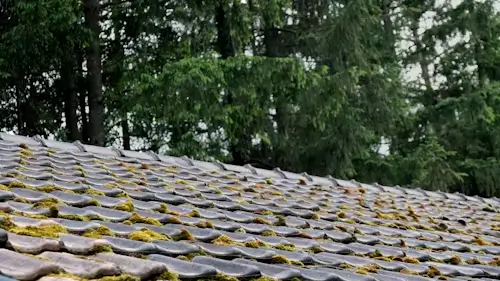
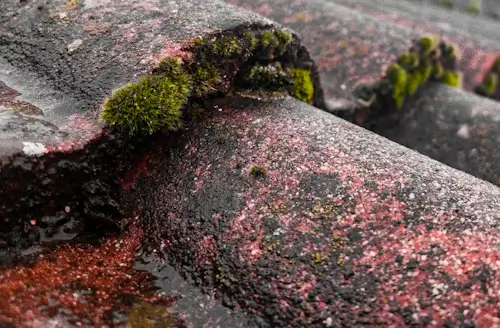
Moss does not behave like ordinary dirt. It can hold water against the roof surface, accumulate organic debris, and interfere with the way shingles shed water. ARMA specifically identifies moss growth as a concern for asphalt roofing because it can damage shingles, obstruct intended water shedding, and hold debris on the roof.
Consequently, homeowners should not wait until an interior ceiling stain appears before checking a moss-covered roof.
Who Is This Boise Roof Moss Guide For?
This guide is designed for Boise-area homeowners, landlords, residential property managers, and people responsible for maintaining asphalt-shingle properties.
It is especially useful when you notice:
- Green moss patches on roof shingles
- Moss growing around shaded roof sections
- Organic debris accumulating on shingles
- Moss around roof valleys or edges
- Repeated moisture retention on one roof slope
- Moss growing beneath nearby tree canopies
- Increasing amounts of roof granules in gutters
- Dark biological growth that is difficult to identify
The guide also helps homeowners decide when to inspect, when to seek professional advice, and when a roof may require more than simple cleaning.
How to Use This Roof Moss Removal Guide
Use this guide as a decision-making checklist rather than as instructions for climbing onto your roof.
First, inspect the roof from a safe location.
Next, identify whether the visible growth appears to be moss, algae, lichen, or accumulated organic debris.
Then, consider the roof’s age and condition.
After that, check the manufacturer’s maintenance recommendations before applying any chemical treatment.
Finally, if the roof is steep, slippery, difficult to access, or heavily covered with growth, have the condition assessed by a qualified professional rather than attempting unsafe roof work yourself.
ARMA also notes that roof-cleaning surfaces can become slippery and hazardous during treatment, which is an important reason to take roof access and fall protection seriously.
When Should You Use This Guide?
Use this guide when you are seeing the first signs of roof moss, when moss repeatedly returns, or when you are unsure whether a green roof covering represents a cosmetic issue or a maintenance concern.
It is particularly useful in spring and fall, when homeowners are already checking roof drainage, accumulated debris, and seasonal exterior conditions.
However, there is no universal “every two years” or “every three years” rule that applies to every Boise roof. The appropriate inspection frequency depends on shade, vegetation, moisture, roofing material, roof age, and previous biological growth.
Why Does Moss Grow on Boise Roofs?
Moss generally needs moisture and suitable surface conditions to establish itself.
A roof surrounded by mature trees can receive more shade and organic debris than a roof exposed to full sunlight. Likewise, roof slopes that remain damp for longer periods may provide a better environment for biological growth.
Several conditions can contribute to moss development:
Shade and Limited Sunlight
North-facing or heavily shaded roof sections can dry more slowly after rain or snow.
As a result, moss may establish more easily on these areas than on sunny roof slopes.
Tree Canopy and Organic Debris
Nearby trees can deposit leaves, needles, small branches, and other organic material onto shingles.
That material can retain moisture and provide an environment where moss can continue developing.
Persistent Roof Moisture
Moss requires moisture to survive.
Therefore, areas with poor airflow, excessive shade, debris accumulation, or recurring moisture deserve closer attention.
Roof Surface Condition
Older roofing materials may be more vulnerable to maintenance problems because their surface has already experienced years of ultraviolet exposure, weather, and normal aging.
For that reason, the same cleaning method should not automatically be used on every roof.
How Does Moss Damage Asphalt Shingles?
The direct answer: moss can hold moisture and debris against asphalt shingles and interfere with normal water shedding.
As moss becomes established, it can create a persistent layer between the environment and the roofing surface.
That matters because asphalt shingles are designed to shed water rather than remain continuously saturated.
ARMA states that moss growth damages asphalt shingles and can interfere with the intended water-shedding process while holding debris against the roofing system.
Over time, this can contribute to roofing deterioration.
Moisture Retention
Moss can behave like a moisture-holding layer.
After rain or snow, the roof may remain damp for longer in areas where moss is established.
Debris Retention
Leaves and other organic material can become trapped within the moss.
Consequently, the roof can develop an increasingly dense layer of biological and organic material.
Water-Shedding Problems
Roof shingles are designed to move water downward.
When moss grows between or over shingle edges, normal drainage can become less effective.
Freeze-Thaw Exposure
Boise experiences winter freezing conditions.
Therefore, moisture retained around roofing materials can become an additional maintenance concern during repeated freezing and thawing.
This does not mean that every moss-covered roof will immediately leak. Instead, it means that persistent moss deserves attention before the condition becomes more difficult to manage.
Moss vs. Algae vs. Lichen: What Is Growing on Your Roof?
Not every green or dark roof stain is moss.
Correct identification matters because different biological growths behave differently.
Moss
Moss normally appears as green, three-dimensional growth that can form visible tufts or mats.
It can retain moisture and debris against shingles.
Algae
Algae commonly appears as dark streaks or discoloration.
ARMA explains that algae discoloration is primarily an appearance concern, while moss can create more direct problems for asphalt shingles.
Lichen
Lichen is a combination of a fungus and photosynthetic organism and can appear as crusty or irregular growth attached to roofing surfaces.
Because the three can look similar from the ground, homeowners should avoid assuming that every dark or green roof area requires the same treatment.
What Are the Early Signs That Your Roof Needs Attention?
The earlier you identify biological growth, the easier it is to evaluate the underlying condition.
Watch for:
- Small green patches
- Expanding moss along shaded slopes
- Moss around roof valleys
- Organic debris trapped between shingles
- Dark streaks spreading across multiple roof sections
- Excessive granules accumulating in gutters
- Shingles that appear lifted or distorted
- Water entering areas where roof drainage should be clear
Importantly, homeowners should not walk onto a roof simply to investigate these signs.
A ground-level visual inspection is safer, while a professional roof assessment can provide more detailed information when necessary.
Is Pressure Washing Safe for Asphalt Shingles?
No. Pressure washing is not the appropriate default method for asphalt shingle moss removal.
ARMA specifically advises against using power washers, brushes, or brooms on asphalt roofing because aggressive cleaning can loosen and remove protective shingle granules.
That is an important distinction.
A stronger stream of water does not necessarily produce a better roof-cleaning result.
Instead, excessive mechanical force can create a new roofing problem while attempting to remove the original one.
For this reason, homeowners searching for moss removal roof Boise should focus on the cleaning method and roofing material rather than simply choosing the highest-pressure equipment.
What Is the Safer Approach to Roof Moss Removal?
The safer approach is generally based on controlled treatment rather than aggressive physical force.
ARMA’s residential asphalt roofing guidance recommends appropriate cleaning solutions for algae, moss, and lichen and specifically advises homeowners to consult the roofing manufacturer before using chemicals. It also recommends low-pressure rinsing rather than power washing.
Therefore, a proper process should consider:
Roof Material Identification
First determine whether the surface is asphalt shingles, wood shingles, tile, metal, or another material.
Different materials have different maintenance requirements.
Roof Condition Assessment
Before treatment, check for cracked, missing, lifted, or excessively weathered shingles.
Biological Growth Identification
Determine whether the visible problem is primarily moss, algae, lichen, or organic debris.
Manufacturer Guidance
Check the roofing manufacturer’s instructions before applying any chemical treatment.
Controlled Application
The cleaning method should minimize unnecessary mechanical abrasion and protect surrounding property.
Safe Rinsing and Runoff Management
Cleaning should also account for landscaping, gutters, downspouts, and runoff.
What Should You Never Do When Removing Roof Moss?
Avoid these common mistakes:
Do not power wash asphalt shingles.
ARMA specifically warns against power washing because it can damage roofing materials and remove granules.
Do not aggressively scrape moss from shingles.
Scraping can physically disturb the roofing surface.
Do not use random household chemicals.
The correct chemical depends on the roofing material and manufacturer’s requirements.
Do not walk on a wet or moss-covered roof.
Biological growth and cleaning solutions can make the surface extremely slippery.
Do not assume every green roof needs the same treatment.
Moss, algae, and lichen are different problems.
How Can Boise Homeowners Reduce Moss Regrowth?
Removing existing moss is only part of long-term roof care.
Homeowners can also reduce the conditions that encourage biological growth.
Control Excessive Roof Debris
Leaves and pine needles can retain moisture.
Therefore, keeping roof drainage areas clear is an important part of maintenance.
Manage Tree Canopy
Where practical, maintaining appropriate clearance around the roof can improve sunlight and airflow.
Keep Gutters Flowing
A clear drainage system helps move water away from the roofline.
For related maintenance, Clean My Roofs’ gutter cleaning service provides information about gutter debris removal and downspout flow. Gutter Cleaning Boise
Inspect Shaded Roof Slopes
Instead of waiting for visible roof damage, periodically check shaded areas for early biological growth.
Follow Manufacturer Recommendations
Roofing manufacturers may have specific requirements for cleaning, maintenance, and chemical use.
Does Roof Moss Always Mean You Need a New Roof?
No. Visible moss does not automatically mean that the roof needs replacement.
Moss is a maintenance concern, but the condition of the underlying roofing system must be evaluated separately.
A roof with relatively healthy shingles and early biological growth may require maintenance.
However, a heavily moss-covered roof with extensive granule loss, cracked shingles, water intrusion, or advanced aging may require a broader roofing evaluation.
Therefore, homeowners should avoid making a replacement decision based solely on the presence of moss.
Roof Moss Removal and Gutter Maintenance Work Together
Roof and gutter maintenance are closely connected.
As roofing materials age, debris and biological material can move toward gutters during rainfall.
At the same time, clogged gutters can interfere with proper roof drainage.
Consequently, homeowners should consider the roof and drainage system together rather than treating them as completely separate maintenance areas.
For a broader seasonal approach, see the Seasonal Home Exterior Maintenance Guide in Boise. Seasonal Home Exterior Maintenance Guide in Boise
Roof Moss Removal and Roof Cleaning Are Not Exactly the Same
These terms are related, but they describe different levels of intent.
Roof moss removal focuses specifically on moss growth.
Roof cleaning is broader and may address moss, algae, lichen, dirt, organic debris, and visible staining.
Therefore, someone searching how to remove roof moss Idaho may need a different solution from someone searching for general roof cleaning.
If you want to compare broader roof-care options, see the site’s roof cleaning information. Roof Cleaning and Moss Removal in Boise
How Much Does Roof Moss Removal Depend on the Property?
There is no responsible single price that applies to every Boise roof.
The scope can vary according to:
- Roof size
- Roof pitch
- Amount of moss
- Roof accessibility
- Roofing material
- Roof condition
- Tree coverage
- Debris accumulation
- Treatment requirements
- Landscaping around the property
Therefore, homeowners should evaluate the actual roof rather than relying on a generic price estimate.
For a related budgeting topic, the site’s roof cleaning cost guide explains the factors that can influence roof-cleaning pricing in Boise. Roof Cleaning Cost in Boise: 2026 Guide
When Is Professional Roof Moss Removal Worth Considering?
Professional evaluation becomes especially useful when:
- The roof is steep
- Moss covers a large area
- The roof is difficult to access
- Shingles appear damaged
- The homeowner cannot safely inspect the surface
- Biological growth repeatedly returns
- The roof is older
- There are signs of water intrusion
- The cleaning method is unclear
- The roofing manufacturer has specific maintenance requirements
In these situations, the goal should be safe identification and appropriate treatment, not simply removing the visible green material as quickly as possible.
What Does the Research Say About Roof Moss Maintenance?
The technical guidance is consistent on one important point: roof cleaning should be matched to the roofing material and performed without unnecessary damage.
ARMA’s residential asphalt roofing manual explains that moss can damage asphalt shingles, retain debris, and interfere with water shedding. It also recommends manufacturer-specific cleaning guidance and warns against power washing and abrasive cleaning methods.
University of Idaho Extension also publishes homeowner guidance on caring for wood shingles and shakes, including protection against fungus, moss, and lichen.
These sources reinforce a simple principle: identify the roofing material first, then choose the maintenance method.
Key Takeaway for Boise Property Owners
If you see moss on your Boise roof, do not immediately reach for a pressure washer.
Instead, identify the type and extent of growth, inspect the roof condition from a safe position, check the manufacturer’s recommendations, and address moisture and debris conditions that may encourage regrowth.
Most importantly, remember that roof moss removal is a preservation decision.
The objective is not merely to make the roof green-free for a few days. The objective is to protect the roofing material, maintain normal water shedding, reduce unnecessary moisture retention, and identify potential problems before they become expensive repairs
Frequently Asked Questions About Roof Moss Removal
How do I remove roof moss in Idaho?
The safest approach is to identify the roofing material first and then follow the manufacturer’s approved cleaning method. For asphalt shingles, ARMA recommends appropriate cleaning solutions and low-pressure rinsing while warning against power washing, abrasive brushes, and brooms.
Is roof moss removal necessary in Boise?
Yes, persistent moss deserves attention because it can retain moisture and debris and interfere with the normal water-shedding function of asphalt shingles. However, the appropriate treatment depends on the roof’s material, condition, amount of growth, shade, and surrounding environment.
Can I use a pressure washer to remove roof moss?
No, not as a standard method for asphalt shingles. ARMA specifically advises against power washing because aggressive pressure can loosen and remove protective granules from asphalt roofing.
Is moss worse on shaded Boise roofs?
Shaded roofs can be more susceptible because reduced sunlight can allow moisture to remain on the surface longer. Tree canopy can also contribute leaves, needles, and other organic debris that retain moisture.
Does moss mean my roof is leaking?
Not necessarily. Moss can be a warning sign of moisture and environmental conditions, but its presence alone does not prove that a roof is leaking. Look for additional signs such as damaged shingles, interior stains, or visible water intrusion.
How often should I inspect my roof for moss?
There is no universal inspection interval for every Boise property. Homes with mature trees, shaded roof slopes, recurring moss, or significant organic debris may need more frequent visual checks than properties with open, sunny roofs.
Can roof moss grow back after removal?
Yes. Moss can return when the conditions that supported it remain unchanged. Reducing excessive debris, managing surrounding vegetation where practical, improving airflow, and keeping roof drainage functioning can help reduce favorable conditions for recurring growth.
Is roof moss removal safe for asphalt shingles?
It can be, when the method is appropriate for the shingles and follows manufacturer guidance. ARMA warns that aggressive power washing and abrasive brushing can damage asphalt roofing, so the cleaning approach matters as much as the goal.
Final Conclusion
Roof moss removal in Boise should be approached as preventive roof maintenance rather than simple cosmetic cleaning.
Moss can retain moisture, hold organic debris against shingles, and interfere with normal water shedding. Meanwhile, aggressive cleaning can create a different problem by removing protective roofing granules.
Therefore, the best decision is a balanced one: identify the biological growth, understand the roof material, evaluate the roof’s condition, follow manufacturer recommendations, and use a safe maintenance method.
For Boise homeowners, early attention is usually more useful than waiting until moss growth is accompanied by damaged shingles or interior water problems.
When you combine periodic roof observation with sensible debris and drainage maintenance, you create a more practical long-term strategy for protecting your roofing investment.
Related Clean My Roofs Resources
For broader roof-care planning, explore the Seasonal Home Exterior Maintenance Guide in Boise. Seasonal Home Exterior Maintenance Guide
For drainage protection, see Gutter Cleaning Boise. Gutter Cleaning Boise
For pricing research, see How Much Does Roof Cleaning Cost in Boise? Roof Cleaning Cost Boise 2026 Guide
For broader roof and exterior-care information, visit Clean My Roofs. Clean My Roofs Boise
Pingback: Gutter Cleaning & Foundation Protection: The Ultimate Boise Homes
Thanks for highlighting this! Proper maintenance is key to long-term roof health
Pingback: The Master Calendar: A Seasonal Guide to Home Exterior Maintenance in Boise, Idaho | Primary category | site title
Thanks for highlighting this! Proper maintenance is key to long-term roof health