
Storm Damage Roof Idaho: A Safe Insurance Claims Guide
Last Updated: August 26, 2026
AI Overview: Storm Damage Roof Idaho
Storm damage roof Idaho claims generally begin with three priorities: safety, documentation, and policy review. After a hail or wind event, homeowners should document visible damage, prevent additional damage when reasonably necessary, notify their insurer according to the policy, and preserve evidence for the claims investigation.
Coverage depends on the specific homeowners policy and the cause, extent, age, and circumstances of the damage. Idaho’s Department of Insurance notes that standard homeowners coverage typically includes certain losses from wind and hail, but homeowners should check their individual policy for exclusions, limitations, deductibles, and settlement terms.
Key Takeaway
A successful storm-damage roof claim is built on evidence, not assumptions.
Photographs, videos, inspection findings, repair receipts, dates, weather information, and clear communication with the insurer can help establish what happened and what damage occurred. At the same time, homeowners should avoid contractors or adjusters who pressure them into unnecessary replacement decisions or promise that an insurer will automatically pay for a new roof. Idaho’s Department of Insurance specifically warns consumers about these practices.
What Is Storm Damage Roof Idaho?
Storm Damage Roof Idaho refers to roof damage caused by weather events such as hail, high winds, and severe storms that may affect shingles, roofing materials, gutters, and related areas of a home.
Quick Answer: What Should You Do After Storm Damage to a Roof in Idaho?
If a storm damages your Idaho roof, first make sure the property is safe, then photograph and document the visible damage before making non-emergency repairs. Next, review your homeowners insurance policy, determine your deductible, report the loss to your insurer when appropriate, and keep records of inspections, temporary repairs, receipts, and communications.
Idaho’s Department of Insurance recommends documenting damage, mitigating additional damage when necessary, keeping receipts, and working through the claim process with your insurance company or agent.
The most important point is simple: do not assume that a roof is undamaged just because it looks normal from the ground. Hail and wind can affect shingles, flashing, gutters, and other roof components without creating an obvious hole.
Who This Guide Is For
This guide is for Idaho homeowners, property owners, and residential property managers who need to evaluate possible storm damage, document their property condition, or prepare for an insurance claim after a severe weather event.
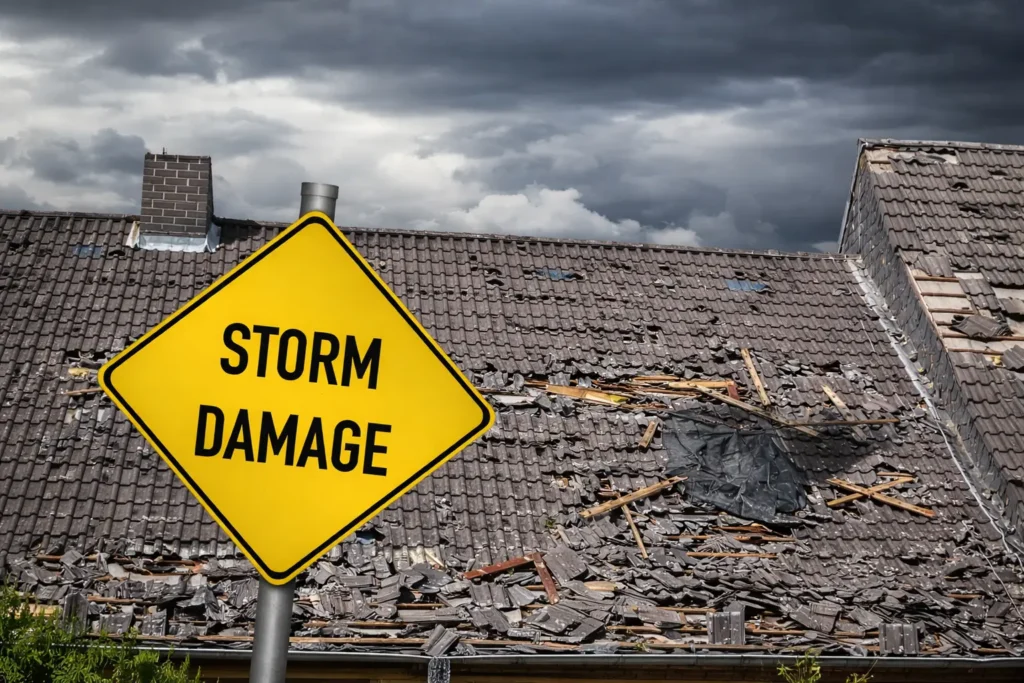
Who Is This Storm Damage Roof Idaho Guide For?
This guide is designed for:
- Idaho homeowners who have experienced hail or high winds
- Boise and Treasure Valley property owners
- Homeowners who notice missing, lifted, or damaged shingles
- Property owners who discover water intrusion after a storm
- Anyone considering whether to report a roof insurance claim
- Homeowners preparing for an insurance adjuster’s inspection
- Property managers documenting storm-related roof damage
How This Guide Helps
This guide explains:
- How to recognize common storm-related roof damage
- What evidence to photograph
- What to check inside the home
- How the Idaho insurance claim process generally works
- What a roof inspection can reveal
- How deductibles and coverage affect decisions
- Which contractor and insurance practices deserve caution
- What to do if an insurer’s initial assessment does not match your documentation
When Should You Use This Guide?
Use this guide immediately after a significant hail or wind event, especially when you notice missing shingles, granule accumulation, dented gutters, damaged flashing, new leaks, ceiling stains, or other changes.
You can also use it before contacting your insurer if you need to organize photographs, inspection records, receipts, and other evidence.
However, an emergency takes priority over documentation. If the property has an active leak or presents a safety hazard, take reasonable steps to prevent further damage and keep records of the work and expenses.
How to Identify Storm Damage on an Idaho Roof
Not every storm creates obvious damage. A roof can appear intact from the yard while individual shingles, flashing, vents, or gutters have been affected.
Look for Missing or Lifted Shingles
Strong wind can lift, crease, loosen, or remove shingles. Look for irregular rows, exposed underlayment, displaced shingles, or sections that no longer appear properly sealed.
Do not climb onto a wet or damaged roof simply to investigate it. A ground-level inspection combined with photographs and a qualified inspection is safer.
Check for Hail-Related Granule Loss
Hail can displace the protective granules from asphalt shingles. You may also find unusual concentrations of granules around gutters and downspouts.
Granule loss by itself does not automatically establish an insurance claim. Roof age, normal wear, installation quality, previous damage, and the specific storm event can all matter.
Inspect Gutters and Exterior Components
Look at gutters, downspouts, flashing, vents, siding, screens, and other exposed components.
Dents or impact marks can provide useful evidence that a hail event affected the property. Photograph each area before cleaning or repairing it.
Check the Attic and Interior
After a significant storm, check accessible areas for:
- New ceiling stains
- Damp insulation
- Water marks
- Dripping or active leaks
- Wet roof decking
- Moisture around roof penetrations
If you discover active water intrusion, prioritize preventing additional damage rather than waiting for a perfect inspection.
What Should You Photograph After a Roof Storm?
Create a simple evidence record.
Photograph the property from several angles before moving damaged materials. Then capture close-ups of:
- Missing shingles
- Lifted or creased shingles
- Hail impact marks
- Granule accumulation
- Dented gutters
- Damaged flashing
- Roof vents
- Skylights
- Siding
- Windows and screens
- Interior ceiling stains
- Attic moisture
- Fallen branches or debris
Also record the date, approximate time of the storm, and when you first noticed the damage.
Idaho’s Department of Insurance specifically recommends photos or video of initial damage and advises keeping damaged items until the claims adjuster provides direction.
How Does the Idaho Roof Insurance Claim Process Work?
The exact process depends on your policy and insurer, but the general sequence is straightforward.
1. Make the Property Safe
First, deal with immediate safety hazards.
Stay away from downed power lines, unstable structures, broken glass, and unsafe roof areas. If emergency protection is necessary, document what you did and keep your receipts.
2. Document the Damage
Photograph and record the condition before permanent repairs whenever practical.
Your documentation should show both the individual damage and the overall property condition.
3. Review Your Policy
Check:
- Your deductible
- Covered perils
- Roof coverage
- Exclusions
- Actual Cash Value provisions
- Replacement Cost provisions
- Reporting requirements
- Any applicable limitations
Idaho’s Department of Insurance emphasizes that the insurance policy is the contract governing the claim, so homeowners should confirm coverage with their insurer rather than relying on general assumptions.
4. Report the Claim When Appropriate
If you determine that the damage may exceed your deductible or otherwise warrants a claim, contact your insurer or agent.
The Idaho Department of Insurance advises policyholders to report damage as soon as they know there is damage and decide to file a claim.
5. Prepare for the Adjuster’s Inspection
Keep your photographs, videos, inspection reports, receipts, and notes organized.
The adjuster investigates the loss and evaluates the damage and applicable coverage. Idaho’s Department of Insurance explains that adjusters may use contractors, engineers, or appraisers when evaluating the cause or value of damage.
Will Homeowners Insurance Pay for Storm Damage to a Roof in Idaho?
It may, but there is no universal guarantee.
Idaho’s Department of Insurance states that homeowners policies typically provide coverage for certain standard losses, including wind and hail, but the actual policy controls the coverage available for a particular property.
The important questions are:
- What caused the damage?
- Is that cause covered by the policy?
- Is the damage related to a specific storm event?
- What deductible applies?
- Does the policy use Actual Cash Value or Replacement Cost?
- Are there exclusions or limitations?
- Is the claimed damage supported by documentation?
Never assume that another homeowner’s settlement determines what your insurer must pay.
What Is the Difference Between Actual Cash Value and Replacement Cost?
This distinction can significantly affect a roof claim.
Actual Cash Value (ACV) generally considers depreciation when calculating the value of the damaged property.
Replacement Cost (RC) can provide additional payment toward replacing the damaged property, subject to the policy’s terms and requirements.
Idaho’s Department of Insurance explains that some policies may initially pay Actual Cash Value and then pay the depreciated amount later when repairs or replacement are completed, if the policy provides Replacement Cost coverage.
Always confirm your specific settlement method with your insurer.
What Are Common Storm Damage Roof Claim Mistakes?
Waiting Too Long to Document Damage
A leaking ceiling or missing shingle may be obvious later but harder to connect to a specific storm if there is no timely documentation.
Making Permanent Repairs Before Discussing the Claim
Emergency mitigation may be necessary, but permanent repairs can complicate the evidence available to an adjuster.
Idaho’s Department of Insurance advises homeowners to obtain confirmation from their insurance company regarding coverage before approving repairs when possible.
Assuming a Full Roof Replacement Is Guaranteed
A storm does not automatically mean that an entire roof must be replaced.
The scope depends on the actual damage, policy language, roof condition, applicable code requirements, and the insurer’s evaluation.
Signing a Contract Under Pressure
Be cautious if someone arrives unexpectedly after a storm and immediately promises a free roof, guaranteed insurance approval, or a waived deductible.
Idaho’s Department of Insurance specifically identifies unsolicited adjusters or contractors, guaranteed full replacements, free upgrades, and deductible-waiver offers as warning signs.
How Can Idaho Homeowners Avoid Storm-Chaser Problems?
A legitimate contractor should be willing to provide clear identification, written documentation, and a contract that you can review before signing.
Do not allow urgency to replace due diligence.
Ask:
- Who is the company?
- Where is it based?
- Can I verify its credentials?
- Will I receive a written inspection?
- What exactly does the contract authorize?
- Am I being asked to sign an assignment of benefits?
- Is anyone promising that insurance will definitely pay?
The Idaho Department of Insurance recommends caution with contractors and public adjusters who use aggressive sales tactics or make guarantees about insurance outcomes.
What If the Insurance Company and Homeowner Disagree?
Start by reviewing the written explanation from the insurer.
If you believe the cause or value of the damage has been evaluated incorrectly, organize your supporting evidence and ask the insurer to reconsider the determination.
Idaho’s Department of Insurance says homeowners can provide documentation from their own expert supporting the cause or value of the loss for the insurer’s review. If concerns remain, the Department’s Consumer Affairs section can provide information and assistance with insurance disputes.
Idaho Storm Damage Roof Claim Checklist
Before moving through the claim process, make sure you have:
- Photos of exterior damage
- Photos of interior damage
- Roof inspection documentation
- Date and approximate time of the storm
- Insurance policy information
- Deductible information
- Emergency repair receipts
- Contractor estimates
- Adjuster contact information
- Copies of emails and written communications
- Notes from inspections
- A list of damaged property
Keeping everything together makes the process easier to follow and reduces the chance of losing important evidence.

Frequently Asked Questions About Storm Damage Roof Idaho
Does homeowners insurance cover hail damage to a roof in Idaho?
Generally, hail can be a covered cause of loss under standard homeowners coverage, but the policy determines whether a specific claim is covered. Check your policy’s covered perils, exclusions, deductible, and roof settlement provisions before assuming that every type of hail damage qualifies.
How do I know if my roof has hidden storm damage?
Look for indirect evidence such as granule accumulation, lifted or creased shingles, damaged flashing, dented gutters, attic moisture, or new interior stains. A qualified roof inspection can identify conditions that are difficult to evaluate safely from ground level.
Should I file an insurance claim for a few damaged shingles?
Not necessarily. Compare the estimated repair cost with your deductible and review your policy before deciding. Idaho’s Department of Insurance specifically notes that homeowners may want a contractor inspection when damage is difficult to see and may consider paying for minor damage themselves.
Should I repair my roof before the insurance adjuster arrives?
Emergency mitigation may be necessary to prevent additional damage, but permanent repairs should generally be discussed with your insurer first when practical. Keep photographs, receipts, damaged materials, and documentation of all emergency work.
Can an insurance company deny a storm-damage roof claim?
A claim can be denied or limited when the reported damage is not covered, an exclusion applies, the evidence does not support the claimed cause, or policy conditions are not met. If you disagree with the determination, review the written explanation, provide supporting documentation, and contact the Idaho Department of Insurance if you need assistance with an insurance dispute.
Final Takeaway: Protect the Evidence Before You Protect the Roof
Storm damage roof Idaho claims are easier to navigate when homeowners treat documentation as seriously as the physical damage itself.
After a significant hail or wind event, prioritize safety, document what you can safely see, prevent additional damage when necessary, review your policy, and communicate with your insurer in writing when appropriate.
Most importantly, do not let a door-to-door contractor, an unexpected adjuster, or a neighbor’s insurance settlement determine what you believe your own policy covers. Your policy, the documented damage, and the actual circumstances of the loss should guide the claim process. Idaho’s Department of Insurance provides consumer resources for homeowners who need help understanding or resolving insurance issues.